Healthcare Models US 2026: Societal Impact Analysis

Anúncios
The societal impact of different healthcare models in the US by 2026 will largely depend on their ability to balance access, quality, and cost-effectiveness for all citizens, addressing existing disparities and future health challenges.
Understanding the future of healthcare in America is more critical now than ever. This comparison/analysis of the societal impact of different healthcare models in the US by 2026 delves into the potential outcomes of three major systems, exploring how they might reshape public health, economic stability, and individual well-being across the nation. What does the landscape of American healthcare truly look like in the coming years, and how will these models impact your life?
Anúncios
The Current Landscape of US Healthcare: A Complex Web
The United States healthcare system is notoriously complex, a patchwork of public and private entities, each with its own set of rules, costs, and accessibility. This intricate structure has evolved over decades, shaped by legislative changes, technological advancements, and shifting societal needs.
By 2026, many of these existing complexities are projected to persist, while new challenges and opportunities will undoubtedly emerge. Understanding the foundational elements of the current system is crucial before we can project the societal impact of potential model shifts.
Public and Private Mix
The US healthcare system is characterized by a significant blend of public and private insurance. Private insurance, primarily employer-sponsored, covers the majority of the working population, while public programs like Medicare and Medicaid cater to specific demographics.
- Employer-Sponsored Insurance: Remains the dominant form of coverage, though its stability is increasingly questioned due to rising premiums and deductibles.
- Medicare: Provides health insurance for Americans aged 65 and older, and for some younger people with disabilities.
- Medicaid: Offers health coverage to low-income individuals and families, with eligibility varying by state.
- Affordable Care Act (ACA) Marketplaces: Offer subsidized private insurance plans to individuals who do not have access to employer-sponsored coverage or other public programs.
The interplay between these different segments creates a dynamic and often fragmented system. This fragmentation can lead to significant disparities in access, quality, and affordability, which are central to any discussion of societal impact. The ongoing debate about healthcare reform often revolves around how to best integrate or streamline these disparate components to achieve more equitable and efficient outcomes.
In conclusion, the current US healthcare landscape is a mosaic of public and private funding, delivery, and regulation. This inherent complexity sets the stage for any future transformations, making the analysis of different models by 2026 particularly pertinent for understanding their broader societal implications.
Model 1: Enhanced Multi-Payer System and its Societal Impact
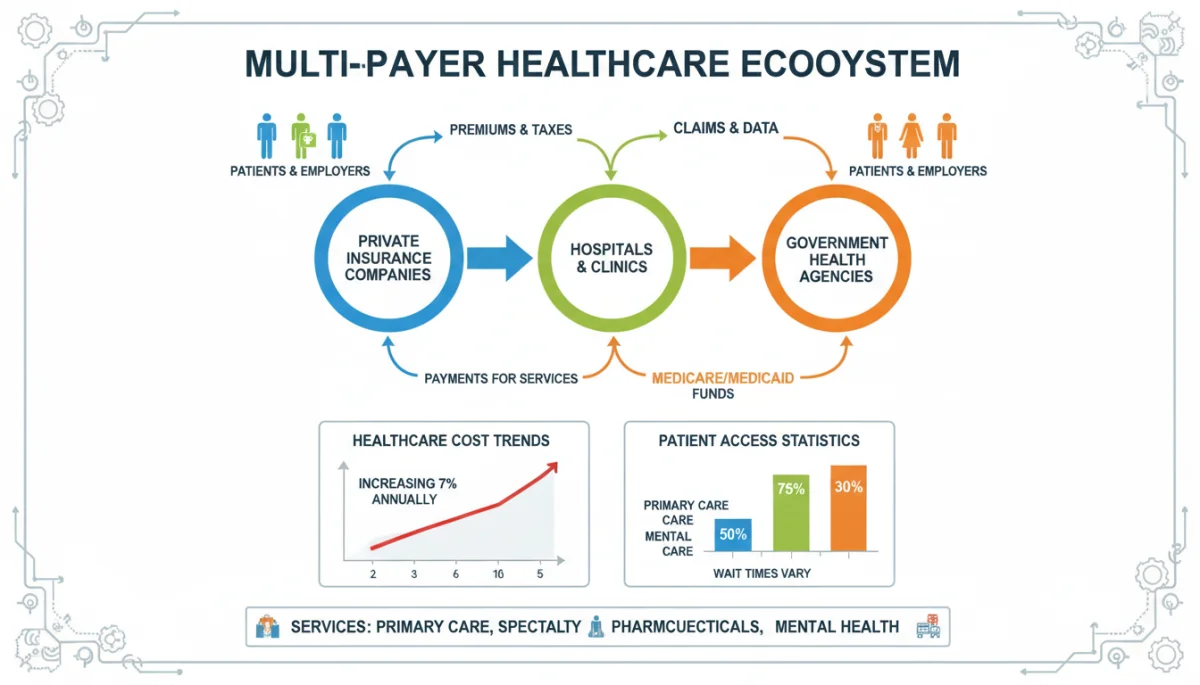
An enhanced multi-payer system represents an evolution of the current US model, aiming to retain private insurance while significantly strengthening public options and regulations. This approach seeks to address existing flaws by improving access, affordability, and quality without completely overhauling the private sector.
Anúncios
Proponents argue that this model leverages the strengths of market competition while providing a safety net for vulnerable populations. The societal impact of such a system by 2026 could be substantial, affecting everything from individual health outcomes to national economic stability.
Key Features and Potential Outcomes
This model would likely involve more robust government regulation of insurance markets, potentially including a public option that competes with private insurers. The goal is to drive down costs and expand coverage through increased competition and standardized benefits.
- Expanded Public Option: A government-run health insurance plan offered alongside private plans, potentially increasing competition and lowering premiums.
- Increased Subsidies: Greater financial assistance for individuals and families to afford insurance premiums and out-of-pocket costs.
- Stronger Regulatory Oversight: Stricter rules on insurance companies regarding coverage, pricing, and administrative practices.
- Focus on Preventative Care: Incentives for preventative services to reduce long-term healthcare costs and improve population health.
The societal impact could include a reduction in the uninsured rate, improved access to essential health services, and a decrease in medical debt for many Americans. However, critics often point to potential downsides, such as increased government spending and concerns about the efficiency of a public option. The balancing act between private market innovation and public welfare will define its success.
Ultimately, an enhanced multi-payer system by 2026 could lead to a more inclusive and affordable healthcare landscape, reducing health disparities while maintaining a degree of consumer choice. The challenge lies in effective implementation and continuous adaptation to evolving healthcare needs.
Model 2: Single-Payer System (Medicare for All) and its Societal Impact
A single-payer system, often referred to as Medicare for All, represents a radical departure from the current US healthcare structure. Under this model, the government would become the primary insurer, financing healthcare services for all citizens through taxes. Private insurance would be largely eliminated for essential benefits, with a focus on universal access and simplified administration.
The societal impact of such a fundamental shift by 2026 would be profound, touching every aspect of American life, from personal finances to the national economy and public health infrastructure.
Universal Coverage and Financial Implications
The most immediate and significant impact of a single-payer system would be the guarantee of universal healthcare coverage. Every American would have access to medical care, regardless of their income, employment status, or pre-existing conditions.
- Elimination of Premiums and Deductibles: Individuals would no longer pay monthly premiums, deductibles, or co-pays for covered services, shifting the financial burden to taxes.
- Reduced Administrative Costs: A single-payer system could significantly streamline billing and administrative processes, leading to substantial cost savings.
- Improved Public Health Outcomes: Universal access to preventative care and early treatment could lead to a healthier population overall, reducing the incidence of chronic diseases.
- Economic Redistribution: Wealthier individuals and corporations would likely pay higher taxes to fund the system, while lower-income individuals would see substantial relief from healthcare costs.
While the promise of universal coverage and simplified access is compelling, concerns often arise regarding the potential for longer wait times for certain procedures, government bureaucracy, and the overall tax burden required to fund such a system. The transition period itself would present immense challenges, requiring a complete overhaul of existing healthcare infrastructure and employment structures.
A single-payer system by 2026 would undoubtedly transform the societal fabric of the US, prioritizing health equity and public well-being over market-driven healthcare. Its success hinges on effective management, public acceptance of higher taxes, and the ability to maintain high-quality care amidst increased demand.
Model 3: Market-Driven, Consumer-Directed Healthcare and its Societal Impact
The market-driven, consumer-directed healthcare model emphasizes individual responsibility, choice, and competition among providers. This approach seeks to empower consumers to make informed healthcare decisions by increasing transparency in pricing and quality, often through high-deductible health plans coupled with health savings accounts (HSAs).
By 2026, a strong shift towards this model would reshape how Americans interact with the healthcare system, potentially fostering greater innovation and efficiency but also raising concerns about access for those with limited financial resources.
Empowering Consumers and Economic Considerations
The core idea behind this model is that by making consumers more sensitive to the actual costs of care, they will become more prudent purchasers of healthcare services, driving down overall costs through market forces. This includes greater transparency in pricing and quality metrics for hospitals and providers.
- High-Deductible Health Plans (HDHPs): Plans with lower premiums but higher deductibles, encouraging individuals to pay for routine care out-of-pocket until the deductible is met.
- Health Savings Accounts (HSAs): Tax-advantaged savings accounts used to pay for qualified medical expenses, often paired with HDHPs.
- Price Transparency Initiatives: Regulations and tools designed to make healthcare costs more understandable and comparable for consumers.
- Increased Provider Competition: Encouraging hospitals and clinics to compete on price and quality to attract patients.
The societal impact could include greater personal accountability for health decisions and potentially lower overall healthcare spending due to more cost-conscious consumers. However, a significant concern is the potential for increased financial burden on low-income individuals and those with chronic conditions, who may struggle to afford high deductibles or complex treatments. This model could exacerbate existing health disparities if not coupled with robust safety nets.
In essence, a market-driven, consumer-directed healthcare system by 2026 would aim to harness economic principles to improve efficiency and reduce costs. Its success or failure in terms of societal impact would largely depend on its ability to protect vulnerable populations while fostering a competitive and transparent healthcare marketplace.
Comparative Analysis of Outcomes by 2026
Evaluating the three distinct healthcare models requires a comparative lens, focusing on how each might address the critical issues of access, quality, and cost. By 2026, the chosen path will have significantly shaped the health and economic well-being of the US population.
Each model presents a unique set of trade-offs, and understanding these is key to projecting their ultimate societal impact. There is no single perfect solution, and the effectiveness of any model will depend on its implementation and adaptability.
Access, Quality, and Cost Trade-offs
The enhanced multi-payer system seeks to incrementally improve the current system, expanding access through public options and subsidies while attempting to control costs through regulation. Quality may see some improvements due to increased competition and preventative care focus.
The single-payer system prioritizes universal access above all else, aiming to eliminate financial barriers to care. This could lead to a significant improvement in population health and a reduction in health disparities. Cost control would come from centralized negotiation and reduced administrative overhead, though the initial tax burden would be substantial. Quality, while universally available, might face challenges with capacity and innovation if not carefully managed.
The market-driven model emphasizes cost efficiency and consumer choice. Access would be tied more directly to individual financial capacity, potentially leaving some vulnerable. Quality would theoretically improve through provider competition, but this might not translate to equitable outcomes across all socioeconomic groups. Costs would be managed by consumer behavior and market forces, which could lead to lower prices for some services but higher out-of-pocket expenses for others.
By 2026, the performance of each model would be measured by metrics such as the uninsured rate, life expectancy, rates of preventable diseases, medical debt, and overall healthcare spending as a percentage of GDP. The societal impact will be profoundly felt in how these indicators shift under each respective framework, determining who benefits and who might be left behind.
In conclusion, the comparative analysis reveals that each model offers distinct advantages and disadvantages. The choice among them reflects fundamental societal values regarding individual liberty versus collective responsibility in healthcare provision.
Technological Integration and Future Challenges
Regardless of the healthcare model adopted, technological integration will play an increasingly pivotal role in shaping its effectiveness and societal impact by 2026. Advancements in telehealth, artificial intelligence (AI), data analytics, and personalized medicine are poised to revolutionize how healthcare is delivered, managed, and experienced.
These technologies offer immense potential to improve efficiency, enhance diagnostic accuracy, and expand access to care, but they also bring their own set of challenges, including issues of data privacy, digital literacy, and equitable access to advanced tools.
The Role of Digital Health and AI
Telehealth, accelerated by recent global events, is likely to become a standard component of care delivery across all models. It offers convenience, reduces geographical barriers, and can lower costs for routine consultations.
- Telehealth Expansion: Widespread adoption of virtual consultations and remote monitoring, especially in rural or underserved areas.
- AI in Diagnostics and Treatment: AI-powered tools assisting in faster, more accurate diagnoses and personalized treatment plans.
- Big Data Analytics: Leveraging large datasets to identify health trends, predict outbreaks, and optimize resource allocation.
- Wearable Technology: Integration of personal health data from wearables into electronic health records for proactive health management.
However, the successful integration of these technologies requires significant investment in infrastructure, robust cybersecurity measures, and policies to ensure equitable access. The digital divide could exacerbate health disparities if not addressed proactively, as not all populations have equal access to high-speed internet or the digital literacy required to utilize these tools effectively.
Furthermore, the ethical implications of AI in healthcare, particularly concerning bias in algorithms and patient autonomy, will need careful consideration. By 2026, the ability of any healthcare model to effectively harness technology while mitigating its risks will be a critical determinant of its societal impact.
In summary, technological integration is not merely an add-on but a fundamental driver of healthcare transformation. Its strategic deployment will be essential for any model to achieve its goals of improved access, quality, and cost-effectiveness in the coming years.
Addressing Health Disparities and Equity
One of the most pressing challenges facing any US healthcare model by 2026 is the persistent issue of health disparities and the broader goal of achieving health equity. Disparities in health outcomes often correlate with socioeconomic status, race, ethnicity, geographic location, and other social determinants of health.
The societal impact of different healthcare models cannot be fully assessed without examining how effectively they address these systemic inequalities. A truly impactful healthcare system must strive to provide equitable access and outcomes for all segments of the population.
Strategies for Equitable Outcomes
Each healthcare model approaches the issue of equity differently. An enhanced multi-payer system might focus on expanding Medicaid eligibility, increasing subsidies for marketplace plans, and implementing targeted programs for underserved communities.
A single-payer system inherently aims for universal equity by removing financial barriers to care, theoretically ensuring that everyone has the same access to services. However, even with universal coverage, disparities can persist due to factors like provider availability, cultural competency, and transportation issues.
A market-driven model, while promoting individual choice, often faces criticism for potentially widening disparities by making healthcare less accessible for those with fewer financial resources. To mitigate this, such a model would need robust safety nets and perhaps vouchers or tax credits specifically designed to support vulnerable populations.
- Community Health Initiatives: Programs focused on addressing social determinants of health, such as housing, food security, and education.
- Culturally Competent Care: Training healthcare providers to understand and respond to the unique needs of diverse patient populations.
- Geographic Accessibility: Incentives for providers to practice in rural and underserved urban areas, and expansion of telehealth services.
- Data-Driven Equity Analysis: Using data to identify and address specific health disparities within different demographic groups.
By 2026, the success of any healthcare model will be significantly judged by its ability to close the gaps in health outcomes among different groups. Moving beyond mere access to care, the focus must be on achieving genuine health equity, where everyone has a fair and just opportunity to be as healthy as possible.
Ultimately, addressing health disparities and promoting equity requires a multi-faceted approach that extends beyond just healthcare delivery to encompass broader societal and economic factors. The chosen healthcare model will serve as a crucial framework within which these efforts are either supported or hindered.
| Healthcare Model | Key Societal Impact by 2026 |
|---|---|
| Enhanced Multi-Payer | Improved access and affordability through public options and regulation, maintaining private insurance. |
| Single-Payer (Medicare for All) | Universal healthcare access, elimination of medical debt, higher taxes, potential wait times. |
| Market-Driven Consumer-Directed | Increased consumer choice and cost transparency, potential for widened disparities without safety nets. |
| Technological Integration | Revolutionizes delivery and management across all models, crucial for efficiency and access, but poses equity challenges. |
Frequently Asked Questions About US Healthcare Models
A multi-payer system involves multiple insurance providers (private and public), offering choice but often complexity. A single-payer system, conversely, has one primary government entity financing healthcare, aiming for universal access and simplified administration, typically eliminating private insurance for essential services.
In a market-driven model, low-income individuals might face significant challenges due to higher out-of-pocket costs and deductibles. While it promotes choice, without robust subsidies or safety nets, it could exacerbate existing health disparities and create barriers to essential care for vulnerable populations.
By 2026, technology will be crucial across all models. Telehealth, AI for diagnostics, and big data analytics will enhance efficiency, access, and personalized care. However, ensuring equitable access to these technologies and addressing data privacy concerns will be significant challenges for successful integration.
A single-payer system (Medicare for All) is the most likely to eliminate medical debt, as the government would cover all essential services, removing patient financial responsibility. Enhanced multi-payer systems might reduce debt through expanded subsidies, while market-driven models could potentially increase it for some.
Each model approaches equity differently. Single-payer systems aim for universal access. Enhanced multi-payer systems use targeted programs and subsidies. Market-driven models rely on consumer choice, needing strong safety nets to prevent widening disparities. All require addressing social determinants of health for true equity.
Conclusion
The future of healthcare in the United States by 2026 is a subject of intense debate and critical importance. Our comparison/analysis of the societal impact of different healthcare models in the US by 2026 reveals that each system—enhanced multi-payer, single-payer, and market-driven consumer-directed—offers distinct pathways with varying implications for access, quality, and cost. While an enhanced multi-payer system seeks incremental improvements, a single-payer model promises universal coverage with significant systemic changes. Conversely, a market-driven approach prioritizes individual choice and cost transparency, albeit with potential equity concerns. The integration of technology and a concerted effort to address health disparities will be crucial for the success of any chosen model. Ultimately, the path taken will profoundly shape the health, economic stability, and overall well-being of the American populace, demanding careful consideration and adaptive strategies to meet the evolving needs of the nation.
