Social Security Policy Adjustments 2026: What Retirees Must Know

Anúncios
The 2026 Social Security policy adjustments are poised to significantly impact retirees by altering benefit structures and eligibility criteria, necessitating proactive financial planning.
Are you a current retiree, or are you planning for your golden years? The upcoming Social Security Policy Adjustments: What the Latest 2026 Projections Mean for Retirees could fundamentally reshape your financial future. Understanding these changes now is not just prudent; it’s essential for safeguarding your retirement security. Let’s delve into what these projections entail and how they might affect you.
Anúncios
Understanding the Social Security Landscape
Social Security has been a cornerstone of retirement security for millions of Americans since its inception. It provides a vital safety net, offering income to retirees, the disabled, and survivors. However, the system faces ongoing financial challenges due to demographic shifts, such as increased life expectancy and lower birth rates, which lead to fewer workers supporting a growing number of beneficiaries.
The Trust Fund’s Role and Challenges
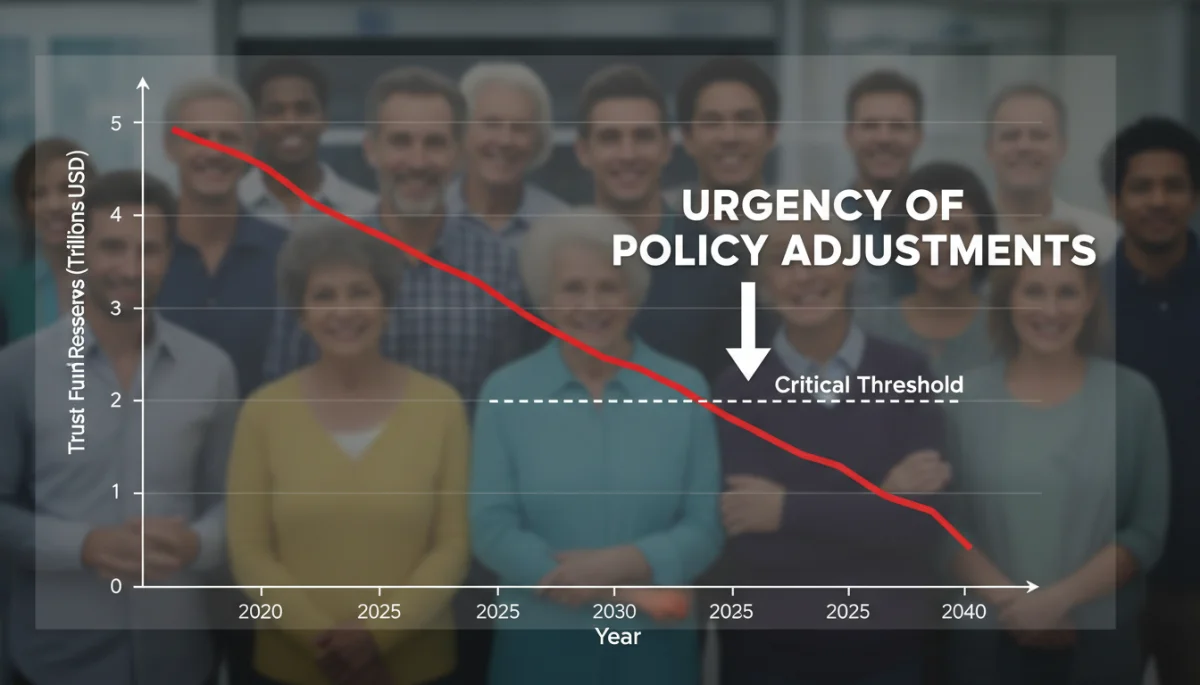
The Social Security Trust Funds, specifically the Old-Age and Survivors Insurance (OASI) and Disability Insurance (DI) Trust Funds, pay benefits. These funds are financed primarily through payroll taxes. When tax revenues exceed payouts, the trust funds grow. Conversely, when payouts exceed revenues, the funds draw down their reserves. Recent projections indicate that without legislative changes, the trust funds could face depletion in the coming years, leading to a potential reduction in benefits.
- OASI Trust Fund: Primarily supports retired workers and their survivors.
- DI Trust Fund: Provides benefits to disabled workers and their families.
- Combined Trust Funds: The solvency of both is crucial for the system’s long-term health.
The financial health of these trust funds is continuously monitored by the Social Security Administration (SSA) and the Board of Trustees. Their annual reports provide critical insights into the system’s solvency and project future financial trajectories, informing policy discussions and potential legislative actions. Understanding these fundamentals is the first step in comprehending the significance of the 2026 projections.
The Latest 2026 Projections: A Closer Look
The 2026 projections from the Social Security Administration’s Board of Trustees are highly anticipated, as they will provide updated insights into the long-term solvency of the program. These projections are based on various economic and demographic assumptions, including birth rates, mortality rates, immigration, inflation, and wage growth. Any shifts in these factors can significantly alter the outlook for the trust funds.
Key Factors Influencing Projections
Several critical elements contribute to the latest forecasts. A sustained low birth rate, for instance, means fewer future workers contributing to the system. Similarly, advancements in healthcare leading to longer lifespans mean beneficiaries collect benefits for extended periods. Economic performance, including GDP growth and employment rates, also plays a substantial role in determining payroll tax revenues.
The 2026 report is expected to refine previous estimates, potentially accelerating or decelerating the projected depletion date of the trust funds. These refined projections often serve as a catalyst for renewed calls for legislative action, as policymakers seek to address the program’s long-term financial stability. For retirees, these updated figures are not just abstract numbers; they directly influence the perceived security of their future benefits.
Anúncios
The interplay of these factors creates a complex dynamic. For example, higher inflation might increase the cost-of-living adjustments (COLAs) for beneficiaries, but if wage growth doesn’t keep pace, the system’s financial strain could intensify. Therefore, the 2026 projections will offer a comprehensive snapshot of these interdependent variables and their collective impact on Social Security’s future.
Potential Policy Adjustments on the Horizon
Given the long-term financial challenges, various policy adjustments are frequently debated to ensure Social Security’s continued solvency. These proposals typically fall into categories that either increase revenue, decrease expenditures, or a combination of both. The 2026 projections will likely intensify these discussions, pushing policymakers to consider concrete steps.
Revenue-Side Proposals
- Increasing the payroll tax rate: A common suggestion involves raising the percentage of earnings that are subject to Social Security taxes. This would immediately boost the system’s income.
- Raising the taxable earnings cap: Currently, earnings above a certain threshold are not subject to Social Security taxes. Eliminating or significantly raising this cap would bring more high earners’ income into the tax base.
- Taxing Social Security benefits: Some proposals suggest increasing the income thresholds at which Social Security benefits become taxable, or taxing a larger portion of benefits.
Expenditure-Side Proposals
- Adjusting the full retirement age (FRA): Gradually increasing the age at which individuals can claim their full Social Security benefits is a frequently discussed option. This would reduce the total amount paid out over a beneficiary’s lifetime.
- Modifying the COLA formula: Changing how cost-of-living adjustments are calculated, perhaps by adopting a different inflation index, could slow the growth of benefits over time.
- Means-testing benefits: This controversial proposal would reduce benefits for higher-income retirees, directing resources to those with greater financial need.
Each of these potential adjustments carries significant implications for different segments of the population. The challenge for policymakers lies in finding a balance that ensures the program’s solvency without unduly burdening current or future retirees. The 2026 projections will provide a critical data point for these ongoing deliberations.
Impact on Current Retirees
For individuals already receiving Social Security benefits, the prospect of policy adjustments can be a source of anxiety. While lawmakers generally strive to protect current beneficiaries, certain changes could still affect their financial stability. Understanding these potential impacts is crucial for effective financial planning.
Potential Effects on Existing Benefits
One of the primary concerns for current retirees is the possibility of a reduction in their monthly benefits. While direct cuts to benefits for existing beneficiaries are politically difficult and often avoided, indirect changes could still occur. For example, modifications to the Cost-of-Living Adjustment (COLA) formula could result in smaller annual increases than retirees have come to expect, diminishing the purchasing power of their benefits over time.
Another area of potential impact could be changes to the taxation of Social Security benefits. If income thresholds for taxation are lowered, or if a larger percentage of benefits becomes taxable, some retirees could see a reduction in their net income. These changes, while not a direct cut to the benefit amount, effectively reduce the financial resources available to retirees.
It’s also important to consider how broader economic conditions, which influence the 2026 projections, might indirectly affect retirees. Inflation, for instance, can erode savings and make fixed incomes less valuable, even with COLA increases. Therefore, current retirees should pay close attention to legislative debates and consider how potential policy shifts might necessitate adjustments to their personal budgets and financial strategies.
Implications for Future Retirees and Pre-Retirees
For those still working and planning for retirement, the 2026 Social Security projections and subsequent policy adjustments hold even more significant implications. Future retirees have a longer runway to adapt to potential changes, but they also face greater uncertainty regarding the exact nature and timing of reforms. Proactive planning becomes paramount in this scenario.
Navigating the Future of Social Security
One of the most discussed potential changes impacting future retirees is an increase in the full retirement age (FRA). If the FRA is raised, individuals would need to work longer to receive their full benefits or accept permanently reduced benefits if they claim earlier. This could significantly alter retirement timelines and financial calculations.
- Increased Full Retirement Age: May require working longer or accepting lower benefits.
- Changes to Benefit Calculation: Formulas used to determine initial benefit amounts could be altered, potentially leading to lower starting benefits for future cohorts.
- Higher Payroll Taxes: Pre-retirees might face higher Social Security payroll tax rates or an expanded taxable earnings base during their working years, impacting their take-home pay and ability to save for retirement.
These potential adjustments underscore the importance of not relying solely on Social Security for retirement income. Diversifying retirement savings through 401(k)s, IRAs, and other investment vehicles becomes even more critical. Financial advisors often recommend stress-testing retirement plans against various scenarios, including reduced Social Security benefits, to ensure resilience. Understanding these long-term implications allows pre-retirees to make informed decisions about their savings, investments, and career trajectories to best prepare for their financial future.
Strategies for Adapting to Policy Changes
Regardless of whether you are a current retiree or still years away from claiming benefits, understanding and adapting to potential Social Security policy adjustments is crucial. Proactive planning can help mitigate negative impacts and ensure greater financial security in retirement.
Financial Planning and Adaptation
A key strategy is to stay informed. Regularly consult official Social Security Administration reports and reputable financial news sources to keep abreast of legislative discussions and projected changes. This knowledge empowers you to make timely adjustments to your financial plan.
For those still working, maximizing contributions to tax-advantaged retirement accounts like 401(k)s and IRAs is more important than ever. Consider increasing your savings rate to build a larger personal retirement nest egg that can supplement or offset any potential reductions in Social Security benefits. Exploring alternative income streams, such as part-time work in retirement or passive income investments, can also provide a valuable buffer.
- Consult a Financial Advisor: Seek personalized advice to understand how potential changes might affect your specific situation and to develop a tailored retirement strategy.
- Review Your Retirement Age: If the full retirement age changes, evaluate whether working longer aligns with your financial goals and health.
- Diversify Income Streams: Reduce reliance on a single source of retirement income by exploring investments, pensions, or other assets.
- Monitor Legislation: Stay informed about proposed Social Security reforms and their potential passage.
For current retirees, reviewing your budget and exploring ways to reduce expenses or generate additional income can be beneficial. Consider optimizing your investment portfolio to ensure it aligns with your risk tolerance and income needs. The ability to adapt your financial strategy will be key to navigating the evolving Social Security landscape.
| Key Point | Brief Description |
|---|---|
| 2026 Projections | Updated forecasts for Social Security trust fund solvency, influencing policy debates. |
| Policy Adjustments | Proposed changes include tax rate increases, cap adjustments, or benefit modifications. |
| Impact on Retirees | Potential for altered COLAs, benefit taxation, or changes to full retirement age. |
| Adaptation Strategies | Emphasizes diversified savings, financial advice, and staying informed for future planning. |
Frequently Asked Questions About Social Security Adjustments
The main factors include increased life expectancy, lower birth rates leading to fewer workers per retiree, and fluctuating economic conditions that affect payroll tax revenues and investment returns for the trust funds.
If the FRA is increased, you would either need to work longer to receive your full Social Security benefits or claim them earlier at a permanently reduced amount. This impacts retirement planning significantly.
Direct cuts to current benefits are rare and politically challenging. However, changes to Cost-of-Living Adjustments (COLAs) or increased taxation of benefits could effectively reduce your net income over time.
The taxable earnings cap is the maximum amount of income subject to Social Security taxes. Raising or eliminating it would mean higher earners pay more into the system, potentially increasing overall revenues.
Diversify your retirement savings beyond Social Security, maximize contributions to 401(k)s/IRAs, consider working longer, and consult a financial advisor to tailor a robust retirement plan.
Conclusion
The Social Security Policy Adjustments: What the Latest 2026 Projections Mean for Retirees represent a critical juncture for millions of Americans. While the exact nature of future reforms remains subject to legislative debate, the underlying demographic and economic pressures necessitating change are undeniable. Current and future retirees must remain vigilant, staying informed about the latest projections and actively engaging in proactive financial planning. By diversifying retirement income sources, seeking professional financial advice, and understanding the potential impacts of policy shifts, individuals can better safeguard their financial well-being and ensure a more secure retirement, regardless of the evolving Social Security landscape.
