US Climate Policy 2030: Impact on Industries
Anúncios
New US climate policy 2030 emissions targets will fundamentally transform American industries, necessitating significant investments in green technologies and sustainable practices to meet ambitious environmental goals.
The landscape of American industry is on the cusp of a transformative era, driven by ambitious environmental goals. With the introduction of new emissions targets for 2030, the US climate policy 2030 agenda aims to steer the nation towards a more sustainable and resilient future. These targets are not merely regulatory hurdles; they represent a pivotal moment for innovation, economic realignment, and a renewed commitment to combating climate change. How will these policies reshape the very fabric of US industries, and what challenges and opportunities lie ahead?
Anúncios
Understanding the New 2030 Emissions Targets
The Biden administration has set forth aggressive targets to reduce greenhouse gas emissions by 50-52% from 2005 levels by 2030. This commitment aligns the United States with global efforts to limit global warming to 1.5 degrees Celsius, as outlined in the Paris Agreement. These targets are designed to accelerate the transition to a clean energy economy, impacting nearly every sector of the US economy.
Achieving these reductions will require a multi-faceted approach, involving significant policy changes, technological advancements, and unprecedented collaboration between government, industry, and civil society. The ambitious nature of these goals means that businesses must adapt quickly, viewing compliance not just as a cost, but as an investment in future competitiveness.
Key policy mechanisms driving change
- Renewable energy incentives: Tax credits, grants, and other financial mechanisms to boost solar, wind, and geothermal power.
- Emissions standards: Stricter regulations for vehicles, power plants, and industrial facilities.
- Carbon capture and storage (CCS): Support for technologies that capture CO2 from industrial sources and store it underground.
- Energy efficiency mandates: New standards for buildings, appliances, and industrial processes to reduce energy consumption.
The framework for these targets is built upon a foundation of scientific consensus and economic analysis, recognizing that climate action can spur economic growth and create new jobs. The conclusion drawn from these foundational elements is that a proactive stance on emissions reduction is not only an environmental imperative but also an economic opportunity, setting the stage for a greener, more prosperous America.
Impact on the Energy Sector
The energy sector stands at the forefront of the transformation brought about by the new 2030 emissions targets. Historically reliant on fossil fuels, this sector is now facing immense pressure to decarbonize rapidly. The shift is not just about reducing coal or natural gas consumption, but about fundamentally reimagining how energy is produced, transmitted, and consumed across the nation.
Investment in renewable energy sources like solar, wind, and hydropower is expected to surge, driven by both federal incentives and growing consumer demand for clean energy. This transition will necessitate substantial upgrades to the existing grid infrastructure, making it more resilient, smarter, and capable of handling intermittent renewable energy inputs. Furthermore, the development of advanced energy storage solutions, such as large-scale batteries, will be crucial to ensure grid stability and reliability.
Challenges and opportunities for fossil fuel industries
For industries traditionally focused on fossil fuels, the 2030 targets present significant challenges, including potential stranded assets and workforce transitions. However, there are also opportunities in areas such as carbon capture, utilization, and storage (CCUS) technologies, which can help reduce the emissions footprint of existing operations. Furthermore, some fossil fuel companies are diversifying into renewable energy, leveraging their extensive infrastructure and engineering expertise.
Anúncios
The transition will also foster innovation in energy efficiency and demand-side management, empowering consumers and businesses to reduce their energy consumption. The overarching conclusion for the energy sector is a future defined by diversification, decentralization, and a relentless pursuit of carbon neutrality, ensuring a sustainable and secure energy supply for all.
Manufacturing and Industrial Processes
The manufacturing sector, a cornerstone of the US economy, faces a unique set of challenges and opportunities under the new 2030 emissions targets. Industrial processes, particularly in heavy industries like steel, cement, and chemicals, are significant contributors to greenhouse gas emissions. Meeting these targets will require a paradigm shift in how goods are produced, emphasizing efficiency, material innovation, and circular economy principles.
Manufacturers will need to invest in cleaner production technologies, such as electrifying industrial heat processes, adopting hydrogen as a fuel source, and implementing advanced waste heat recovery systems. The focus will extend beyond direct emissions from factories to encompass the entire supply chain, encouraging suppliers to also adopt sustainable practices. This holistic approach aims to reduce the embedded carbon in manufactured products.
Technological innovations driving change
- Green hydrogen production: Utilizing renewable electricity to produce hydrogen, a clean fuel for industrial processes.
- Advanced materials: Developing low-carbon alternatives for traditional high-emission materials.
- Industrial electrification: Replacing fossil fuel-fired equipment with electric alternatives powered by renewable energy.
- Circular economy practices: Designing products for longevity, reuse, and recycling to minimize waste and resource consumption.
The embrace of these innovations will not only contribute to emissions reduction but also enhance operational efficiency and reduce long-term costs. The conclusion here is that the manufacturing sector is poised for a significant green transformation, fostering a new era of sustainable production and competitive advantage in a global low-carbon economy.
Transportation Sector Transformation
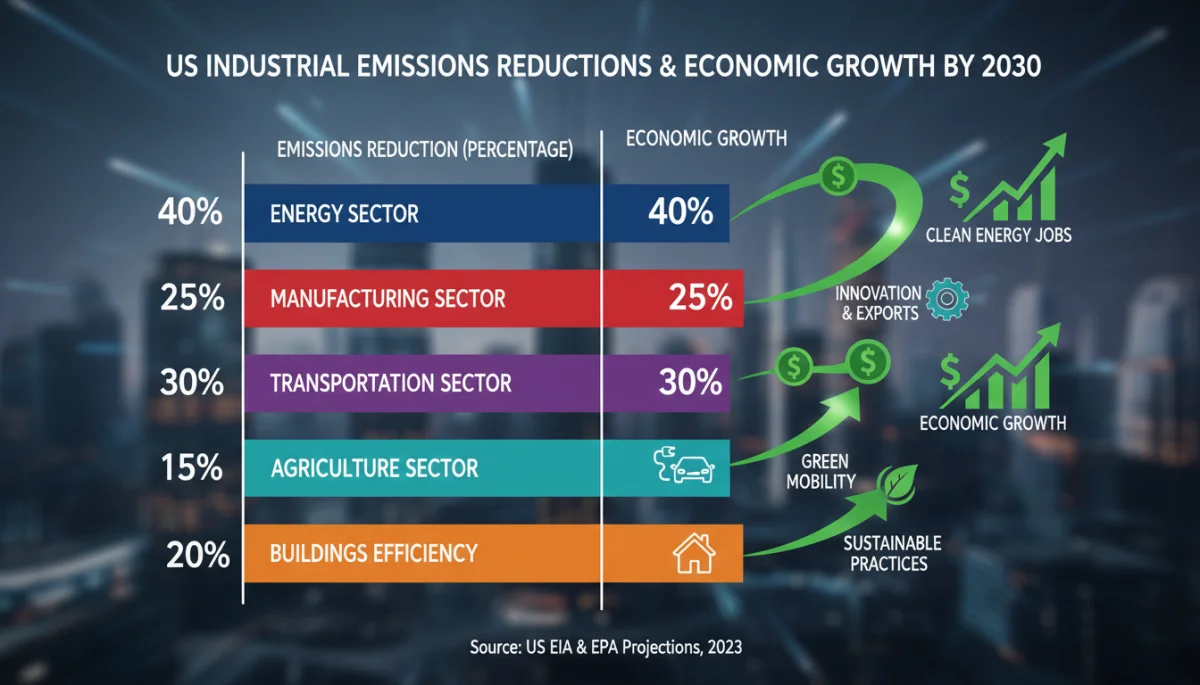
The transportation sector is another critical area targeted by the 2030 emissions goals, given its substantial contribution to greenhouse gas emissions. From personal vehicles to freight and aviation, every segment of transportation is expected to undergo significant changes. The primary focus is on accelerating the adoption of electric vehicles (EVs) and developing sustainable alternative fuels.
Policies are being crafted to support the expansion of EV charging infrastructure, offer consumer incentives for EV purchases, and mandate stricter fuel efficiency standards for internal combustion engine vehicles. Beyond passenger cars, there’s a growing emphasis on decarbonizing heavy-duty trucking through electric and hydrogen-powered trucks, as well as exploring sustainable aviation fuels (SAFs) for air travel. Public transit systems are also encouraged to transition to cleaner fleets.
Infrastructure development and behavioral shifts
The success of these initiatives hinges not only on technological advancements but also on significant infrastructure development and shifts in consumer behavior. Building a robust national charging network, for instance, is paramount to addressing range anxiety and accelerating EV adoption. Similarly, promoting active transportation (walking and cycling) and improving public transit can reduce reliance on private vehicles.
The conclusion for the transportation sector is clear: a future dominated by diverse, low-carbon mobility solutions. This shift will alleviate environmental burdens and create healthier, more efficient urban and rural environments, redefining how Americans move and connect.
Agriculture and Land Use Contributions
While often less discussed in the context of industrial emissions, the agriculture and land use sectors play a vital role in achieving the 2030 climate targets. These sectors are both sources of greenhouse gas emissions (e.g., methane from livestock, nitrous oxide from fertilizers) and potential sinks for carbon through practices that enhance soil carbon sequestration and sustainable forest management.
New policies and incentives are emerging to encourage farmers and landowners to adopt climate-smart agricultural practices. These include precision agriculture, improved manure management, cover cropping, and agroforestry. The goal is to reduce emissions from agricultural operations while simultaneously improving soil health, water quality, and biodiversity. Reforestation and preventing deforestation are also critical components of the land use strategy.
Innovative farming practices and carbon markets
- Precision agriculture: Using technology to optimize resource use, reducing fertilizer and pesticide application.
- Methane reduction strategies: Implementing dietary changes for livestock and improving waste management systems.
- Soil carbon sequestration: Practices like no-till farming and cover cropping to store carbon in the soil.
- Forestry management: Incentives for sustainable logging, afforestation, and avoiding conversion of forests to other uses.
The integration of these practices can transform agriculture into a powerful tool for climate mitigation, offering both environmental benefits and new economic opportunities for farmers through carbon markets. The overall conclusion is that sustainable land management is indispensable for reaching national climate goals, fostering a resilient and productive agricultural sector.
Economic Implications and Job Creation
The transition driven by the new 2030 emissions targets carries significant economic implications, extending far beyond environmental compliance. While initial investments can be substantial, the long-term economic benefits are projected to be considerable, including job creation, increased competitiveness, and reduced healthcare costs associated with pollution.
The clean energy transition is expected to spur growth in new industries, such as renewable energy manufacturing, battery production, and EV infrastructure development. This will lead to the creation of millions of new jobs, requiring a skilled workforce in areas like engineering, installation, and maintenance of green technologies. Retraining programs and educational initiatives will be crucial to ensure a just transition for workers in declining fossil fuel industries.
Investment and innovation driving growth
Government incentives, private sector investment, and venture capital are all converging to accelerate innovation in sustainable technologies. This influx of capital will foster research and development, bringing down the costs of clean energy and making sustainable practices more accessible. Furthermore, US companies that lead in green technologies will gain a competitive edge in the global market, which is increasingly prioritizing sustainability.
The conclusion is that the 2030 emissions targets represent a powerful economic engine, driving sustainable growth, fostering innovation, and creating a robust job market in the burgeoning green economy. This strategic shift will position the US as a leader in global climate solutions.
Policy Challenges and Future Outlook
While the new 2030 emissions targets offer a clear path towards a sustainable future, their implementation is not without significant policy challenges. Navigating political complexities, ensuring equitable distribution of costs and benefits, and securing sustained public and private sector buy-in are all critical for success. Effective policy design must address potential economic disruptions and support vulnerable communities and industries during the transition.
One of the primary challenges lies in maintaining regulatory stability and long-term commitment, regardless of changes in political leadership. The scale of transformation required demands consistent policy signals to encourage sustained investment and innovation. Furthermore, international collaboration will be essential, as climate change is a global issue requiring coordinated efforts.
Addressing potential roadblocks
- Political consensus: Building bipartisan support for climate policies to ensure their longevity.
- Technological scalability: Ensuring that emerging green technologies can be deployed at the necessary scale.
- Just transition: Developing programs to support workers and communities economically affected by the shift away from fossil fuels.
- Global competition: Balancing domestic climate action with the need for US industries to remain competitive internationally.
The future outlook, despite these challenges, remains optimistic. The momentum behind climate action is growing, driven by increasing awareness of climate risks and the undeniable economic opportunities presented by the green transition. The conclusion is that with strategic foresight, adaptive policy-making, and collective action, the US can successfully meet its 2030 emissions targets, paving the way for a healthier planet and a prosperous economy.
| Key Policy Area | Brief Impact Description |
|---|---|
| Energy Sector | Accelerated shift to renewables, grid modernization, and reduced fossil fuel reliance. |
| Manufacturing | Investment in cleaner production, green materials, and circular economy practices. |
| Transportation | Mass adoption of EVs, expanded charging infrastructure, and sustainable fuels. |
| Economic Outlook | Significant job creation, increased competitiveness, and growth in green industries. |
Frequently Asked Questions About 2030 Emissions Targets
The US aims to reduce greenhouse gas emissions by 50-52% from 2005 levels by 2030. This ambitious goal aligns with global efforts to limit global warming and transition towards a clean energy economy, impacting various sectors across the nation.
The energy sector will see accelerated investment in renewables like solar and wind, significant grid modernization, and a push for advanced energy storage solutions. Fossil fuel industries face challenges but also opportunities in carbon capture technologies and diversification.
Manufacturing will shift towards cleaner production methods, including green hydrogen, advanced materials, and industrial electrification. Emphasis will also be placed on circular economy practices to reduce waste and embedded carbon in products.
Yes, the transportation sector will undergo major changes, primarily through accelerated electric vehicle (EV) adoption, expansion of charging infrastructure, and the development of sustainable aviation and heavy-duty vehicle fuels to reduce emissions.
Meeting these targets is expected to create millions of new jobs in green industries, boost economic competitiveness, and foster innovation in sustainable technologies. It also promises reduced healthcare costs due to improved air quality.
Conclusion
The new 2030 emissions targets set forth by the US government mark a critical juncture for American industries. This ambitious climate policy is not merely a regulatory burden but a catalyst for profound transformation, driving innovation, economic growth, and a renewed commitment to sustainability across all sectors. From energy and manufacturing to transportation and agriculture, every industry is called upon to adapt, invest, and innovate. While challenges remain, particularly in policy consistency and equitable transition, the overarching outlook is one of immense opportunity. The journey towards these targets promises a greener, more resilient, and economically vibrant United States, positioning the nation as a leader in global climate action and sustainable development for decades to come.
